
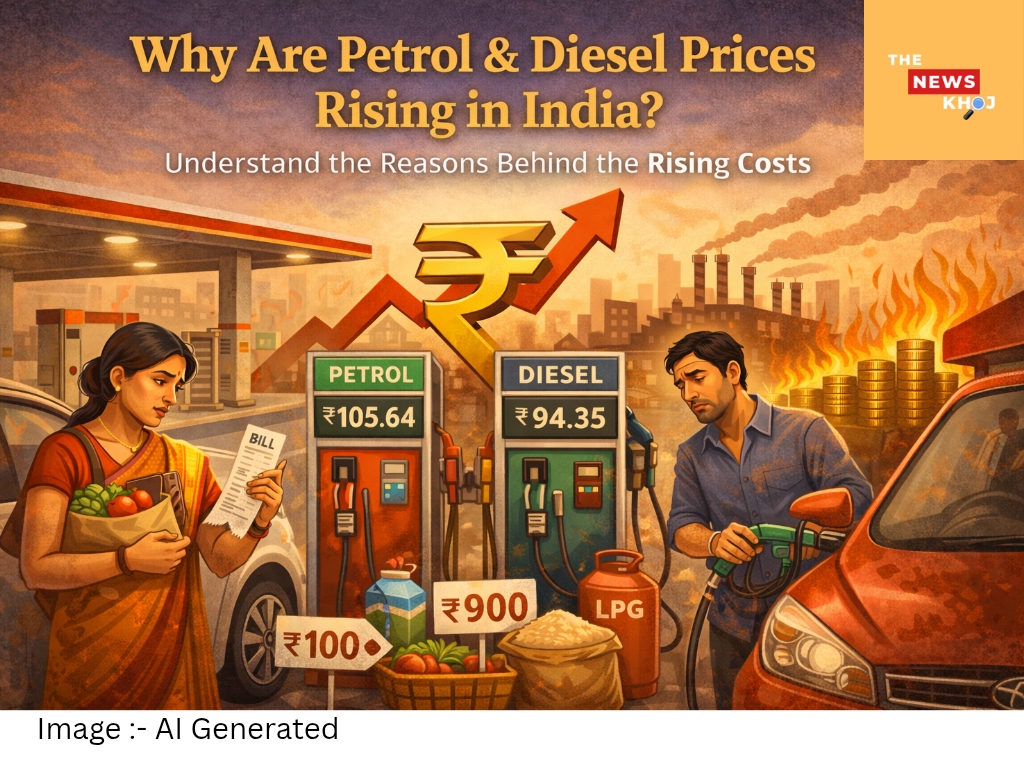
Petrol Diesel Prices: How Do They Change Every Day? A Simple, Details Explanation
If you have ever stopped at a fuel station and noticed that the price on the board looks slightly different from what you paid yesterday, you are not alone. Many people wonder why petrol and diesel prices seem to change so frequently, sometimes even daily. It can feel confusing, frustrating, and unpredictable—especially when household budgets are already tight.
But the truth is, fuel prices do not change randomly. There is an entire system working behind the scenes, involving global oil markets, government taxes, currency exchange rates, transportation costs, and company decisions. Once you understand the process, the daily price changes start to make much more sense.
In this article, we will break everything down in plain, easy English. No complicated economic jargon. Just a practical explanation of how petrol and diesel prices are decided, why they fluctuate every day, and what factors influence what you pay at the pump.
Why Petrol and Diesel Prices Change Frequently
The main reason petrol and diesel prices change is simple: fuel is connected to global markets. Crude oil, which is the raw material used to make petrol and diesel, is traded internationally. Its price moves up and down based on supply and demand, geopolitical events, production decisions by oil-producing countries, and global economic conditions.
Since India imports a large portion of its crude oil requirements from other countries, international price changes directly impact domestic fuel costs.
However, global oil price is only one piece of the puzzle. Taxes, transportation costs, dealer commissions, and currency value also play important roles.
What Is the Daily Fuel Pricing System?
Earlier, fuel prices in many countries were revised periodically, sometimes once a month or even less frequently. But over time, governments and oil companies moved toward a daily price revision system, also called dynamic pricing.
Under this system, petrol and diesel prices are updated every day based on the latest market conditions.
The goal of daily pricing is to:
- Reflect real market costs more accurately
- Avoid sudden large price jumps
- Maintain transparency in pricing
- Align domestic prices with international trends
Instead of waiting for weeks to adjust prices, small changes are made regularly.
The Journey from Crude Oil to Your Vehicle
To understand fuel pricing, it helps to see the full journey.
Step 1: Crude Oil Purchase
Oil companies purchase crude oil from international markets. The price depends on global demand, supply levels, and geopolitical stability.
Step 2: Refining Process
Crude oil cannot be used directly. It must be processed in refineries to produce petrol, diesel, aviation fuel, LPG, and other products. Refining adds costs.
Step 3: Transportation
Fuel is transported from refineries to depots and then to retail petrol pumps. Logistics costs are included.
Step 4: Taxes and Duties
Governments apply taxes, which often make up a significant portion of the final retail price.
Step 5: Dealer Commission
Petrol pump owners receive a commission for selling fuel.
Step 6: Final Retail Price
All these components together determine what you pay per liter.
Major Factors That Affect Daily Fuel Prices
Let’s explore the most important reasons prices change.
1. International Crude Oil Prices
This is the biggest factor.
If crude oil prices rise globally, petrol and diesel prices usually increase. If crude prices fall, fuel prices may decrease—although not always immediately.
Global crude oil prices change because of:
- Production decisions by oil-producing countries
- Conflicts or political tensions
- Natural disasters affecting supply
- Changes in global demand
- Economic growth or recession
Even news or expectations can influence prices.
2. Currency Exchange Rate
Crude oil is traded in US dollars. If the local currency weakens against the dollar, importing oil becomes more expensive.
For example:
- Strong currency = cheaper imports
- Weak currency = expensive imports
So even if crude prices remain stable globally, exchange rate changes can still affect domestic fuel prices.
3. Government Taxes
Taxes are a major part of petrol and diesel pricing.
There are usually multiple types of taxes applied:
- Central government taxes
- State government taxes
- Value-added tax (VAT)
- Other local charges
These taxes may vary between states, which is why fuel prices are different in different cities.
Sometimes governments adjust taxes to control inflation or generate revenue. Tax changes can cause sudden price increases or decreases.
4. Refinery Costs and Margins
Refining crude oil into usable fuel requires energy, infrastructure, and maintenance. Refinery margins also change depending on market conditions.
If refining costs rise, fuel prices may increase.
5. Transportation and Distribution Costs
Fuel must travel long distances before reaching petrol pumps.
Transportation costs depend on:
- Distance from refinery
- Fuel handling charges
- Storage expenses
- Logistics efficiency
Cities closer to refineries often have slightly lower prices compared to remote areas.
6. Dealer Commission
Petrol pump operators earn a fixed commission per liter sold. This amount is added to the retail price.
While dealer commission does not change daily, periodic revisions can affect overall pricing.
Why Prices Sometimes Rise Faster Than They Fall
Many people notice that prices seem to increase quickly but decrease slowly. This perception exists for a few reasons:
- Tax structure — Taxes may not reduce automatically when crude prices fall.
- Inventory costs — Fuel purchased earlier at higher prices may still be in stock.
- Government policy timing — Tax cuts may take time to implement.
- Market stabilization — Companies sometimes avoid sudden drops to maintain stability.
So the relationship between crude oil prices and retail fuel prices is not always perfectly immediate.
Role of Oil Marketing Companies
Fuel retail prices are typically determined by oil marketing companies based on market conditions.
These companies consider:
- International crude prices
- Exchange rates
- Refining costs
- Transportation expenses
- Taxes
- Market competition
They calculate daily price adjustments accordingly.
Why Fuel Prices Differ Between Cities
You may notice petrol is cheaper in one city and more expensive in another. This happens because:
- State taxes differ
- Transportation costs vary
- Local government policies differ
- Dealer margins vary slightly
Even within the same state, minor differences can exist due to logistics.
Impact of Global Events on Fuel Prices
Fuel prices are extremely sensitive to global events.
For example:
- Wars or geopolitical tensions can disrupt supply
- Natural disasters can affect production
- Economic recovery increases demand
- Recession reduces demand
Since oil is a global commodity, events thousands of miles away can affect local pump prices.
Seasonal Demand Changes
Fuel demand changes during different times of the year.
Examples include:
- Higher travel during holidays
- Agricultural season demand
- Winter heating fuel demand in colder regions
- Industrial activity cycles
Higher demand often leads to higher prices.
Government Intervention and Policy Decisions
Governments sometimes intervene to control fuel prices.
Possible actions include:
- Reducing taxes
- Providing subsidies
- Adjusting duties
- Releasing strategic reserves
These decisions are often made to manage inflation, protect consumers, or stabilize the economy.
How Fuel Prices Affect the Economy
Petrol and diesel prices influence many sectors because fuel is essential for transportation and production.
When fuel prices rise:
- Transportation costs increase
- Food prices may increase
- Manufacturing costs rise
- Inflation increases
- Household expenses go up
When fuel prices fall, the opposite may happen.
This is why fuel pricing is considered economically important.
Daily Price Updates: How They Are Calculated
Each day, companies review:
- Global crude oil benchmark prices
- Currency exchange rates
- Refinery margins
- Market conditions
- Government taxes
Based on these inputs, a new price may be set for the next day.
Sometimes the change is very small, even just a few cents or paise per liter.
Why Prices Sometimes Remain Stable for Days
Even though pricing is updated daily, prices may remain unchanged for several days.
This happens when:
- Market changes are minimal
- Companies absorb fluctuations temporarily
- Policy considerations delay adjustments
- Price smoothing strategies are used
So daily pricing does not always mean daily changes.
Long-Term Trends in Fuel Prices
Over the long term, fuel prices generally show an upward trend due to:
- Growing global demand
- Currency inflation
- Increasing production costs
- Environmental regulations
- Tax increases
However, short-term declines do happen during global economic slowdowns.
The Future of Fuel Pricing
Fuel pricing may evolve as energy markets change.
Possible future trends include:
- Increased adoption of electric vehicles
- Alternative fuels development
- Renewable energy expansion
- Carbon regulations
- Technological improvements
These factors could gradually reduce dependence on petrol and diesel over time.
Tips for Consumers to Manage Fuel Expenses
While individuals cannot control fuel prices, they can manage consumption.
Some practical tips:
- Maintain proper tire pressure
- Avoid aggressive driving
- Use fuel-efficient routes
- Reduce unnecessary trips
- Service vehicles regularly
- Consider carpooling
- Explore alternative transportation options
Small changes can reduce overall fuel costs significantly.
Common Misconceptions About Fuel Pricing
Let’s clear up a few myths.
Myth: Prices change randomly.
Reality: Changes follow market calculations.
Myth: Only government decides prices.
Reality: Both market forces and policies influence pricing.
Myth: Global crude price alone decides fuel price.
Reality: Taxes, currency, and logistics also matter.
Understanding these points helps avoid confusion.
Why Understanding Fuel Pricing Matters
Knowing how fuel prices work helps consumers:
- Plan budgets better
- Understand inflation trends
- Make informed financial decisions
- Avoid misinformation
Awareness creates clarity.
Final Thoughts
Petrol and diesel prices change daily because they are connected to a complex network of global markets, government policies, economic conditions, and operational costs. What looks like a simple number on a fuel station board actually reflects international trade, currency fluctuations, logistics systems, and taxation structures working together.
While price fluctuations can feel inconvenient, the daily pricing system is designed to keep prices aligned with real market conditions and avoid sudden shocks.
In the future, energy transitions and technological innovation may reshape fuel pricing completely. Until then, understanding how prices are determined is the best way to stay informed and prepared.
Fuel is more than just a liquid in your vehicle tank—it is a key part of the global economy. And every small price change tells a story about what is happening in the world.